I need a curriculum, not a one-off activity.
Look for an ordered sequence, facilitator guidance, learner evidence, and cumulative work. A box of materials can support a curriculum, but the materials alone do not create one.
$120 one-time purchase per Lab—equivalent to $10 per week across the complete 12-week curriculum. Not a weekly subscription.
See how your child learns—and get a free 15-minute activity.Running a co-op, microschool, or school? See group options →
Product contents and packaging may be updated from time to time. Please refer to the product detail page for the latest information. Actual contents may vary.
EDREAL EXPLAINS / DECISION RULES 01
SELF-DRIVING CARS LAB / DECISION PRIORITY
Students turn road clues into testable if/then rules, decide which rule has priority, then build and revise a safer route. When rules compete, people-safety usually comes first.
See the Self-Driving Cars Lab →Four complete 12-week STEM curricula. EdReal brings the sequence, books, workbooks, physical materials, and facilitator guidance together—so families can spend less time planning and more time learning together.
Four Facilitator-Ready Curricula
Each Lab connects weekly questions, physical materials, workbooks, and facilitator guidance into one cumulative learning arc.
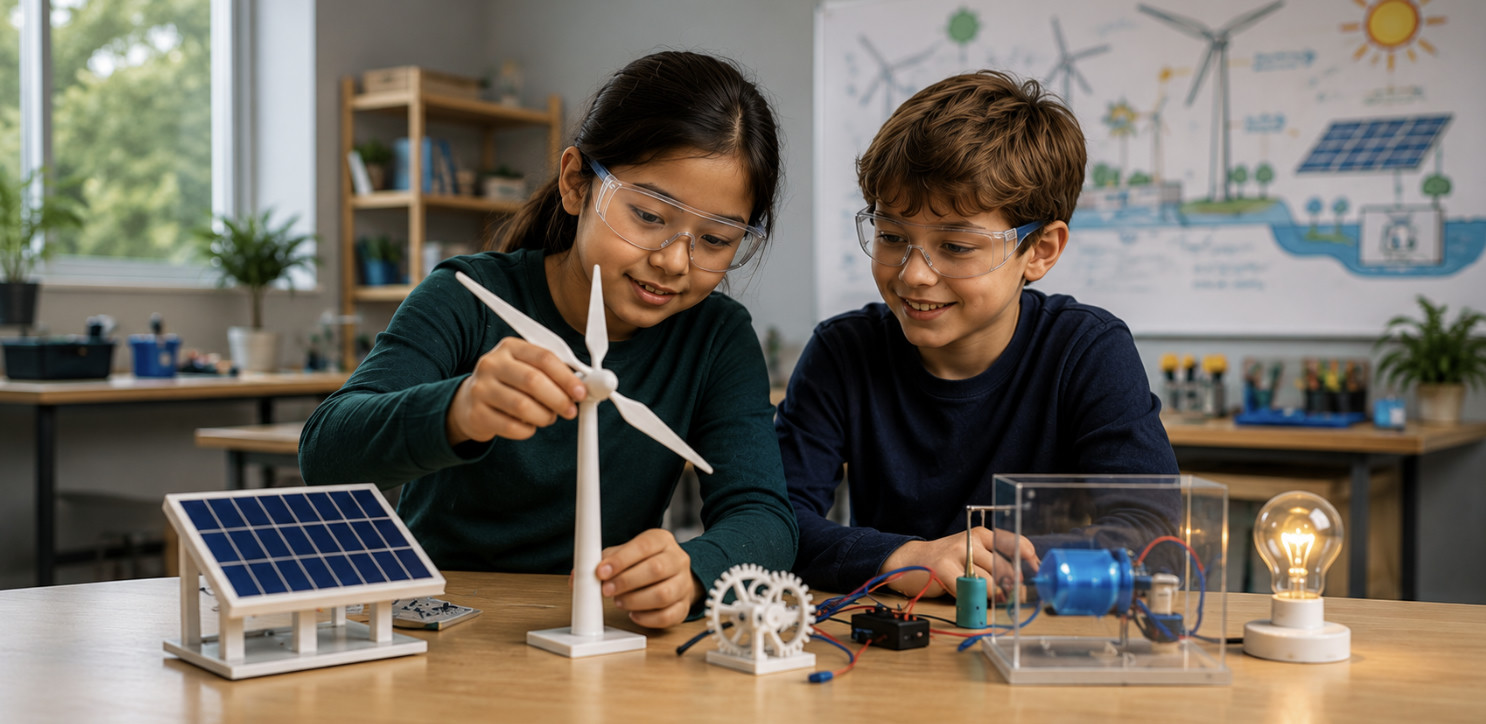 Ages 8–13
Energy Systems
Ages 8–13
Energy Systems
Solar · Wind · Hydro · Storage
Where does energy come from—and how do we capture, store, and use it? Students build working models of solar, wind, and hydro systems and analyze the real tradeoffs engineers face.
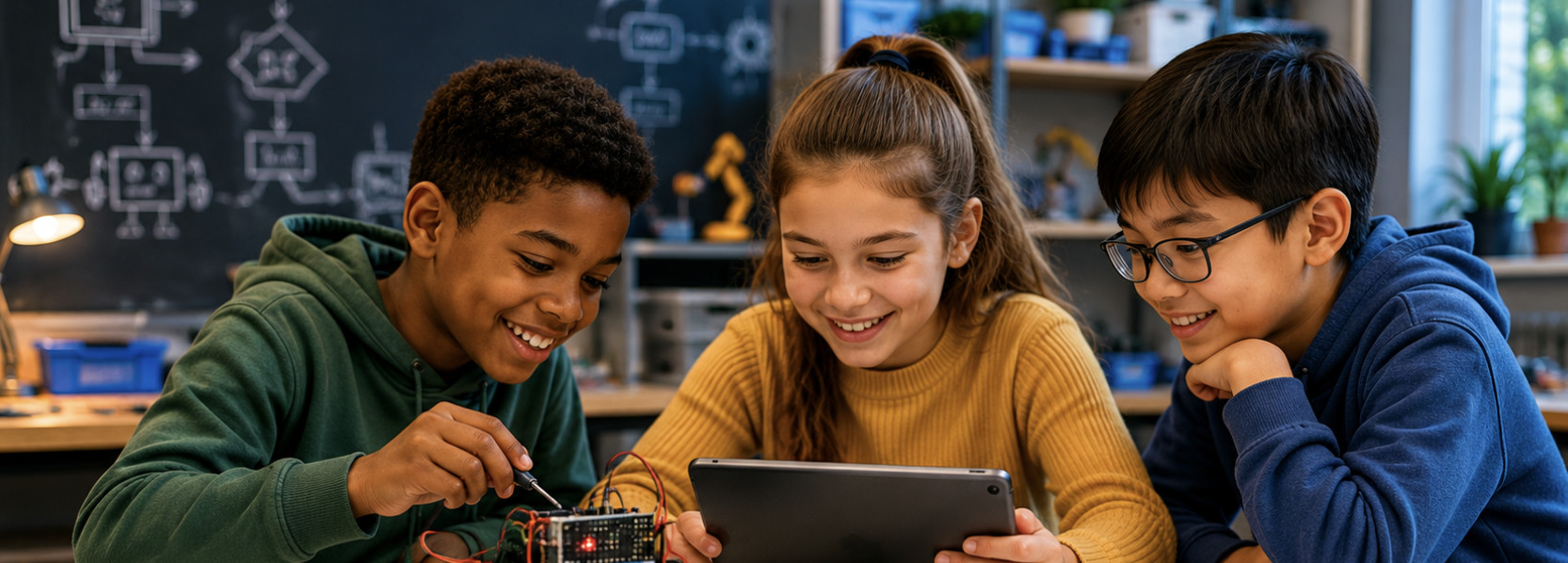 Ages 8–13
Robotics & Logic
Ages 8–13
Robotics & Logic
Sensing · Logic · Algorithms · Decisions
How do machines sense the world and make decisions? Students explore sensors, logic gates, and rule-based algorithms through hands-on robotics builds and structured testing.
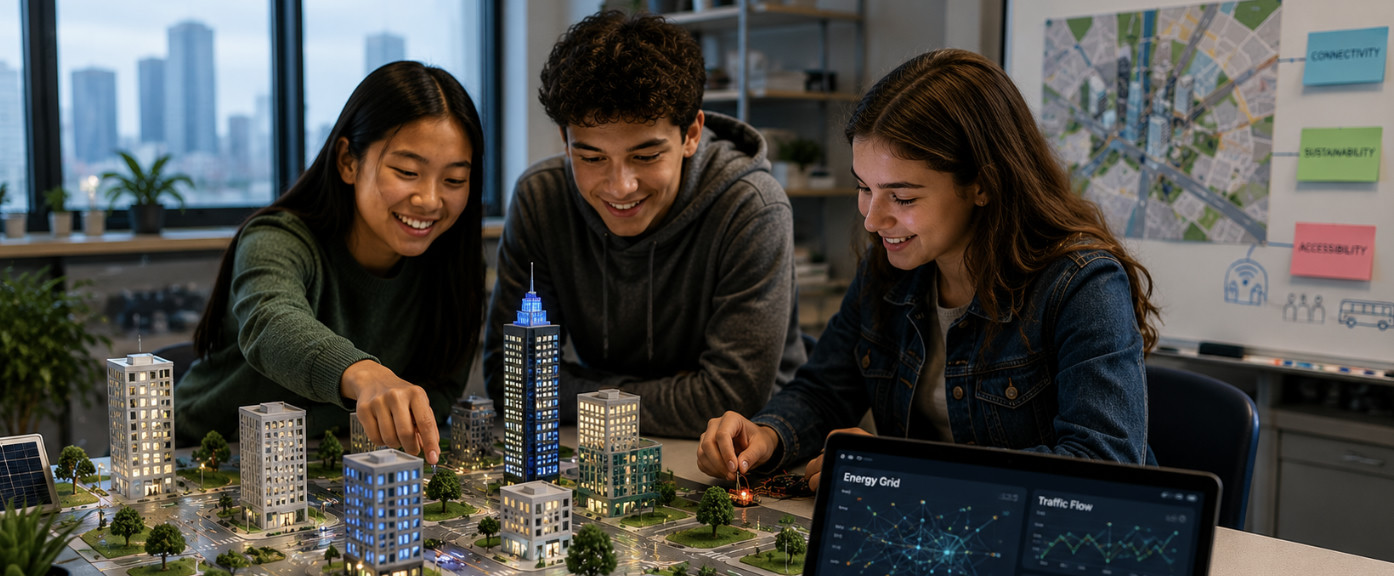 Ages 10–15
Urban Systems
Ages 10–15
Urban Systems
Traffic · Power · Connectivity · Design
Cities are systems of systems. Students integrate energy grids, traffic flow, and sensor networks to understand how modern urban infrastructure works—and how to design it better.
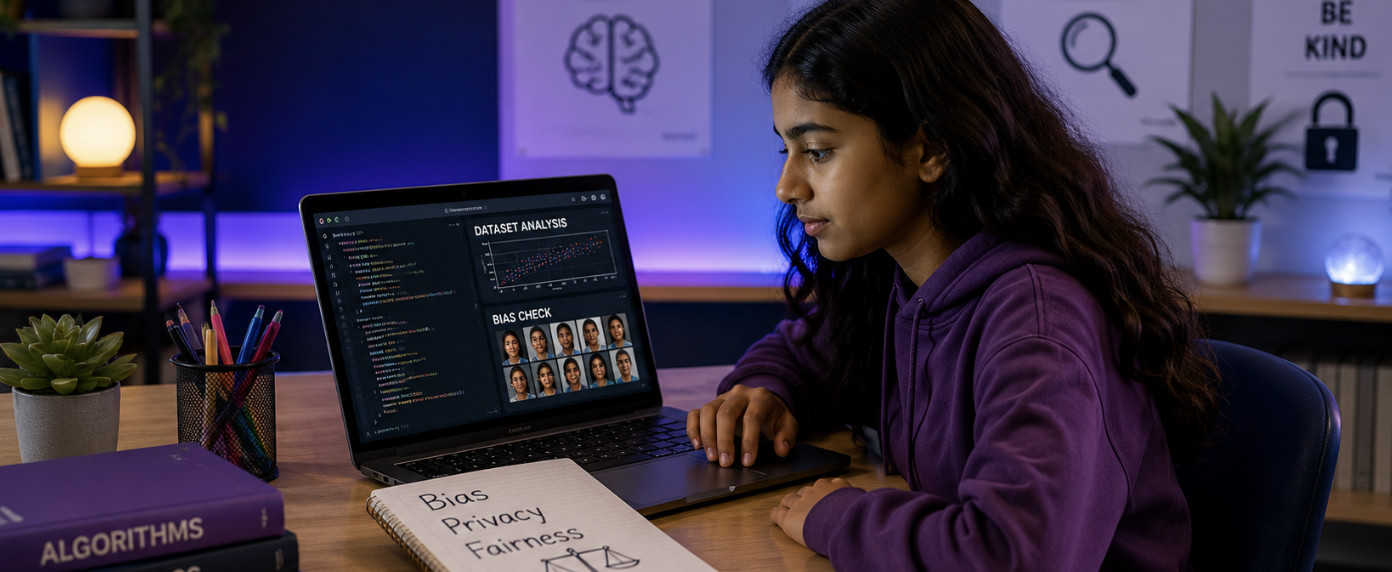 Ages 8–18
Computational Thinking
Ages 8–18
Computational Thinking
Algorithms · Bias · Privacy · Media
Beyond the buzzwords. Students examine how AI systems use data and patterns—then look for errors, bias, privacy risks, and decisions that still require human judgment.
Built For
Designed for home, co-ops, microschools, and schools.
A connected learning path for one child or siblings to explore together. The materials and session guide keep preparation light and the focus on the question in front of you.
A structured, project-based semester for groups of 5–20 students. The facilitator guide provides the sequence, questions, and session support; no STEM background is required.
Meet STEM requirements while standing apart. EdReal goes beyond standard curriculum—combining STEM fundamentals with future-facing topics and critical thinking. Fits in-class, after-school, or summer school, and is ready for any facilitator to run from day one.
Scale future-ready STEM across your schools. EdReal’s standards-aligned, project-based programs meet multiple funding requirements and equip students with the skills to thrive tomorrow. Suitable for in-class, after-school, or summer school—facilitator-ready from the start.
Why EdREAL
7 reasons why families and schools choose EdREAL
The EdReal Difference
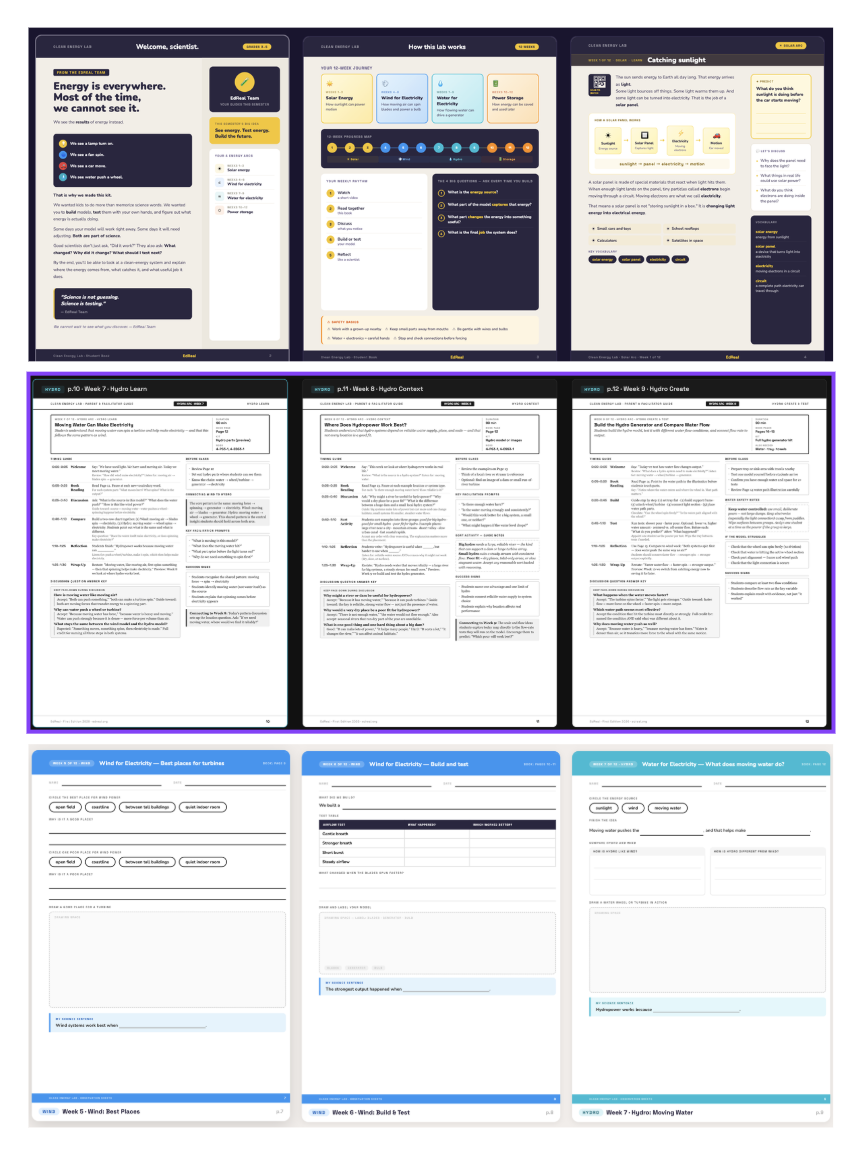
Physical materials, a connected sequence, and facilitator guidance—assembled as one 12-week curriculum.
Each session adds to the last across a 12-week sequence, moving from foundational questions toward a final application.
Every EdReal program is built around physical models, real books, and structured workbooks. Observation, testing, and iteration happen with real objects—not simulations or videos.
Clean energy, autonomous vehicles, smart cities, and AI literacy—examined through models, decisions, and tradeoffs.
An included guide organizes the weekly sequence, materials, questions, and activity flow.
The EdReal Model
A repeatable weekly structure for parents, co-op leaders, microschools, and educators.
Physical components, student workbooks, and a real book arrive as part of the curriculum. No separate curriculum sourcing or printing.
An included guide lays out each week’s question, materials, activity flow, and discussion prompts.
Each session builds on the last. Students move from foundational concepts to complex systems thinking across a full semester of coherent, connected learning.
Durable Habits of Mind
The subject changes. The working habits repeat: break down a system, test an idea, compare evidence, and explain a decision.
Breaking complex systems into basic, knowable parts before building up.
Understanding how parts interact to create emergent behavior in the whole.
Sequencing, logic, pattern recognition, and structured problem-solving.
Making observations, testing hypotheses, and explaining claims with proof.
Identifying problems, building solutions, and iterating based on results.
Comparing solutions and making principled engineering decisions.
Treating an unexpected result as information, then revising the next test.
Identifying relationships between actions, variables, and outcomes.
Using precise STEM language to describe parts, processes, and results.
Standards Connections
EdReal is supplementary and not accredited. Its activities connect to practices found in NGSS, Common Core, and CSTA frameworks.
Defining problems, planning investigations, building models, analyzing evidence, and constructing explanations—the NGSS engineering practices run through every EdReal session.
Explaining reasoning in writing, comparing claims with evidence, and structured technical communication are embedded in every workbook and discussion guide.
Precision, quantitative reasoning, pattern recognition, and structured problem-solving run through measurement, model testing, and data analysis in each program.
Decomposition, pattern recognition, abstraction, and algorithm design—EdReal builds these through physical systems modeling, not screen-based coding alone.
These connections describe shared practices; they do not imply adoption, endorsement, or complete standards coverage.
Now launched
Each complete 12-week Lab is $120 as a one-time purchase—equivalent to $10 per week across the curriculum, not a weekly subscription.
Shop the exact product page for current contents and availability.
One useful STEM idea each week
Each issue turns one timely idea in AI, STEM, or the changing world into a clear family conversation or activity.
One topic. One practical next step.
Free to join and easy to leave. Occasional EdReal product updates are clearly identified.
Get Raise Curious